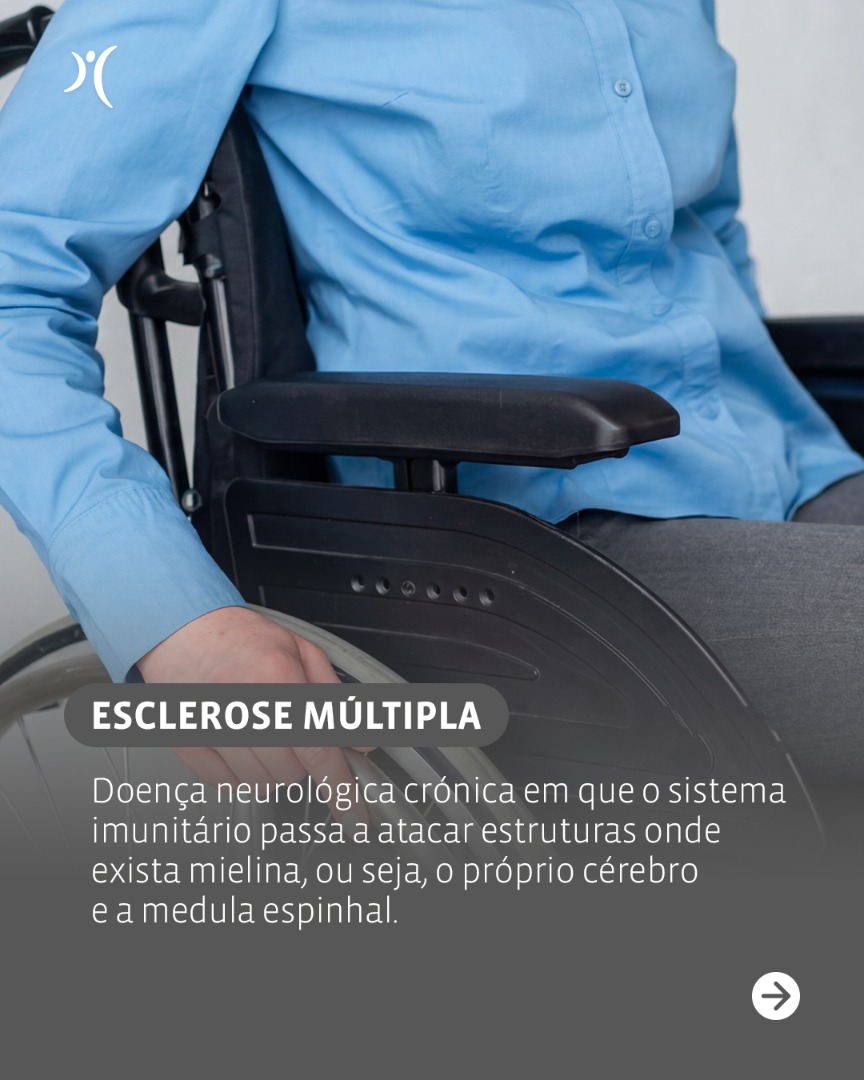





Multiple Sclerosis (MS) is a chronic neurological disease in which the immune system begins to attack structures containing myelin — that is, the brain itself and the spinal cord. For decades, it was considered primarily an inflammatory disease of the white matter (the colour of myelin). Today, it is known that the problem is broader: MS also affects grey matter, neurons and the axons themselves, the “electrical wiring” of the nervous system. The result is a variable combination of inflammation, loss of myelin and progressive neurodegeneration.
Myelin (a structure rich in lipids and proteins) functions as an electrical insulator, ensuring that neuronal electrical signals travel quickly and efficiently. When it is destroyed, nerve signals become slow, uncoordinated or simply stop flowing. In more advanced stages, structural damage to axons also occurs, corresponding to irreversible neurological injury. These lesions can be identified through magnetic resonance imaging.
What happens in the brain in multiple sclerosis?
MS is not caused by a single factor. It is a multifactorial disease resulting from the interaction between genetic predisposition, environmental factors and immune system alterations. The disease affects mainly women, at a ratio of approximately 3 to 1, and typically appears between the ages of 20 and 30.
What are the main risk factors?
MS is genetically complex. More than 200 genetic variants associated with disease risk have already been identified, although none of them alone explains the condition. Environmental factors are increasingly recognised as another important domain.
Epstein–Barr Virus (EBV)
EBV is currently the leading candidate as a causal factor for MS. Most people come into contact with this virus during their lifetime, but individuals who develop EBV infection have a significantly increased risk of developing MS. The dominant hypothesis is that the virus triggers a persistent abnormal immune response.
Vitamin D deficiency and low sun exposure
Low vitamin D levels are associated with a higher risk of MS. This may help explain the relationship between latitude and disease prevalence, with the highest rates observed in regions furthest from the equator (Northern Europe, Canada and southern South America).
Smoking
Smoking increases the risk of developing MS and is also associated with a worse prognosis after diagnosis.
Adolescent obesity
Obesity during adolescence, with a BMI above the 95th percentile, significantly increases the future risk of MS, particularly in girls.
How is MS diagnosed?
The diagnosis of MS does not rely on a “single definitive test”, but rather on a combination of assessments that include clinical history, neurological examination, MRI, cerebrospinal fluid analysis and exclusion of alternative diagnoses. The central principle is demonstrating that inflammatory lesions of the central nervous system have occurred in different locations (“dissemination in space”) and at different times (“dissemination in time”). The McDonald criteria, most recently revised in 2024, are used for this purpose.
How does the disease manifest?
MS usually begins with neurological symptoms that evolve over hours or days and present as relapses. The most common initial symptoms include:
- Painful loss of vision in one eye (optic neuritis)
- Numbness or tingling
- Weakness in a limb
- Gait instability
- Double vision
- Vertigo
- Electric shock–like sensation when bending the neck (Lhermitte’s sign)
- Urinary urgency
- Sexual dysfunction
- Cognition is also affected
One of the least recognised aspects of MS is its cognitive impact. Between 45% and 60% of patients develop cognitive changes over the course of the disease, including:
- Slowed mental processing
- Attention deficits
- Memory difficulties
- Cognitive fatigue
These changes may appear even in individuals with minimal physical disability.
Treatment
The current reality is very different from that of 20 years ago. Today, more than 18 disease‑modifying therapies are approved, acting through distinct immunological mechanisms. Modern treatment goals include:
- Reducing relapses
- Decreasing new MRI‑detectable lesions
- Delaying disability progression
- Preserving cognitive function
- Limiting neurodegeneration
- Progressive neurodegeneration
Current therapies control peripheral inflammation and relapses relatively well. However, chronic compartmentalised inflammation within the brain remains difficult to treat. This is where the new Bruton’s tyrosine kinase (BTK) inhibitors come in — currently one of the most promising areas of research. These molecules can penetrate the central nervous system and act on both B cells and microglia.
Tolebrutinib has also shown delayed disability progression in non‑relapsing secondary progressive MS — a particularly relevant finding, as patients with this form of the disease respond poorly to traditional therapies.
Repairing myelin: still a distant goal
Another line of research aims to promote remyelination. Some molecules, such as clemastine, have shown biological activity, but clinical benefits remain modest.
Physical exercise
A common misconception is that people with MS should avoid physical exertion. Current evidence points in the opposite direction. Regular physical exercise is associated with improved cardiorespiratory fitness, better balance, reduced fatigue, cognitive improvement and a possible anti‑inflammatory and neuroprotective effect.
Multidisciplinary rehabilitation programmes have also demonstrated clear benefits in quality of life and functional capacity.
What is not yet proven
There is a great deal of misinformation surrounding MS. At present, there is no proven “curative” diet, nor is there robust evidence that isolated vitamin supplementation significantly alters disease progression. Furthermore, alternative therapies have not demonstrated consistent efficacy in high‑quality clinical trials.
This does not mean that healthy eating is irrelevant — only that therapeutic claims often exceed the available scientific evidence.
The future direction of research
The next major frontier in MS is not merely controlling inflammatory relapses, but halting progressive neurodegeneration. BTK inhibitors, remyelination therapies and strategies targeting the Epstein–Barr virus represent attempts to address what remains the disease’s greatest biological challenge: the slow, continuous destruction of nervous tissue over time.

Content developed by Dr Leandro Valdemar
29, May 2026